MON - FRI 9:00 - 17:30

Published: May 2026 | by Admin
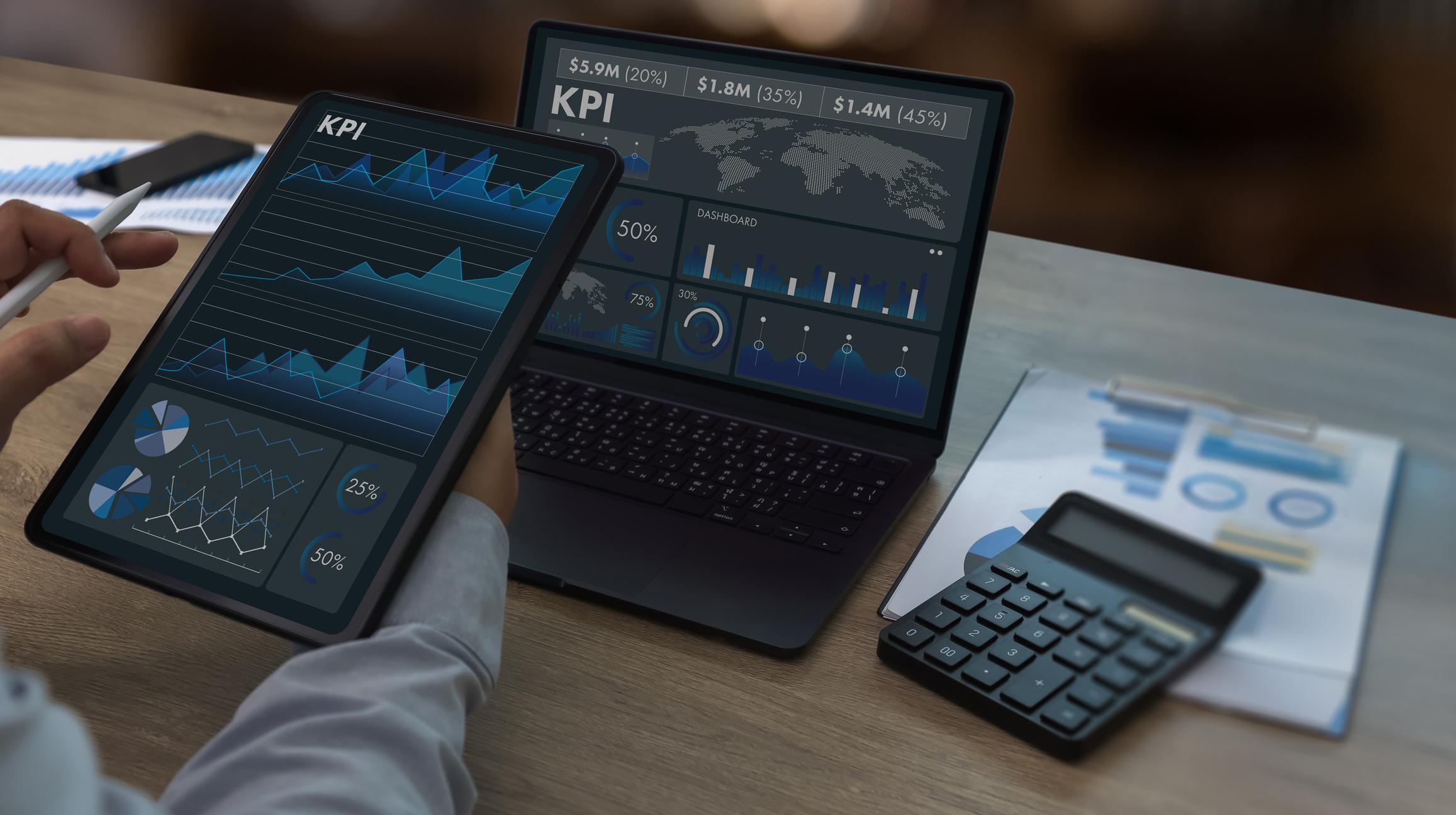
Financial KPIs, or Key Performance Indicators, are measurable values that help businesses evaluate their financial health and overall performance. These indicators provide valuable insights into profitability, cash flow, operational efficiency, and long-term business growth. Regardless of whether a company is a startup, a small business, or an established organisation, tracking financial KPIs is essential for making informed business decisions.
In today’s competitive business environment, relying solely on revenue figures is no longer enough. Businesses need a deeper understanding of their financial position in order to maintain stability and achieve sustainable growth.
Many businesses make the mistake of focusing only on sales and revenue. However, a company can generate strong revenue while still facing serious financial difficulties due to poor cash flow management, rising expenses, or low profitability.
Financial KPIs help business owners identify strengths, weaknesses, and areas that require improvement. They also support smarter decision-making by providing accurate financial insights that can guide budgeting, forecasting, and growth strategies.
Businesses that consistently monitor their financial performance are usually better prepared to manage economic uncertainty and operational challenges.
Revenue growth rate measures how quickly a company’s income is increasing over a specific period of time. This KPI is important because it reflects overall business expansion and market demand.
A healthy revenue growth rate often indicates that a business is attracting customers successfully and maintaining strong sales performance. However, growth should always be supported by profitability and effective cost management to ensure long-term sustainability.
Gross profit margin measures how much profit remains after deducting the direct costs involved in producing goods or services. This KPI helps businesses understand operational efficiency and pricing effectiveness.
A higher gross profit margin usually indicates that a company is managing production costs efficiently while maintaining profitable pricing structures. Businesses with consistently low gross margins may struggle to maintain profitability over time.
Net profit margin is one of the most important indicators of overall financial performance. It shows how much profit a business retains after accounting for all operational expenses, taxes, and additional costs.
Even companies with strong sales figures can face financial pressure if their net profit margins remain weak. Monitoring this KPI helps businesses identify overspending, inefficiencies, and opportunities to improve profitability.
Cash flow remains one of the most critical financial KPIs for any business. It measures the movement of money entering and leaving the company.
Positive cash flow ensures that a business can comfortably manage salaries, supplier payments, operational expenses, and future investments. Many profitable businesses still fail because of poor cash flow management rather than lack of sales.
Maintaining healthy cash flow is essential for long-term financial stability and business continuity.
Accounts receivable turnover measures how efficiently a business collects payments from customers. Slow payment collection can create cash flow problems and increase financial pressure on the business.
A strong accounts receivable turnover ratio generally indicates effective invoicing systems and healthy customer payment behaviour. Businesses that improve payment collection processes often experience stronger financial stability and better operational control.
The operating expense ratio compares business operating expenses to overall revenue. This KPI helps businesses evaluate cost efficiency and understand how much income is being consumed by day-to-day operations.
Monitoring operational expenses regularly can help businesses identify unnecessary spending, improve budgeting, and increase profitability. Companies with controlled operating expenses are often better positioned for sustainable growth.
Return on Investment, commonly known as ROI, measures the profitability of business investments. Whether a company invests in marketing campaigns, technology, employee training, or expansion projects, ROI helps determine whether those investments are delivering positive financial results.
Businesses that regularly track ROI are usually more effective at allocating resources and identifying strategies that contribute to long-term growth.
Modern businesses operate in an environment where financial awareness and data-driven decision-making are increasingly important. Financial KPIs provide business owners with clear insights that support better planning, improved efficiency, and stronger risk management.
Companies that actively monitor financial performance are often better prepared to respond to market changes, economic uncertainty, and competitive pressures. Understanding financial data allows businesses to make strategic decisions with greater confidence.
Tracking financial KPIs is no longer optional for businesses that want to achieve sustainable success in 2026. While revenue remains an important measure of growth, metrics such as cash flow, profit margins, operating expenses, and ROI provide a much clearer picture of overall business performance.
Businesses that understand and monitor their financial health consistently are more likely to improve profitability, manage risks effectively, and build long-term financial stability. In an increasingly competitive business environment, strong financial management remains one of the most important foundations of business success.
Need help with your self-assessment tax return?
Galaxy Financials provides expert tax support to make your self-assessment simple and stress-free.